
Your cart is currently empty!
Blog
December 09, 2025
Blog
17 Different Types of Bullets and Their Uses
December 09, 2025
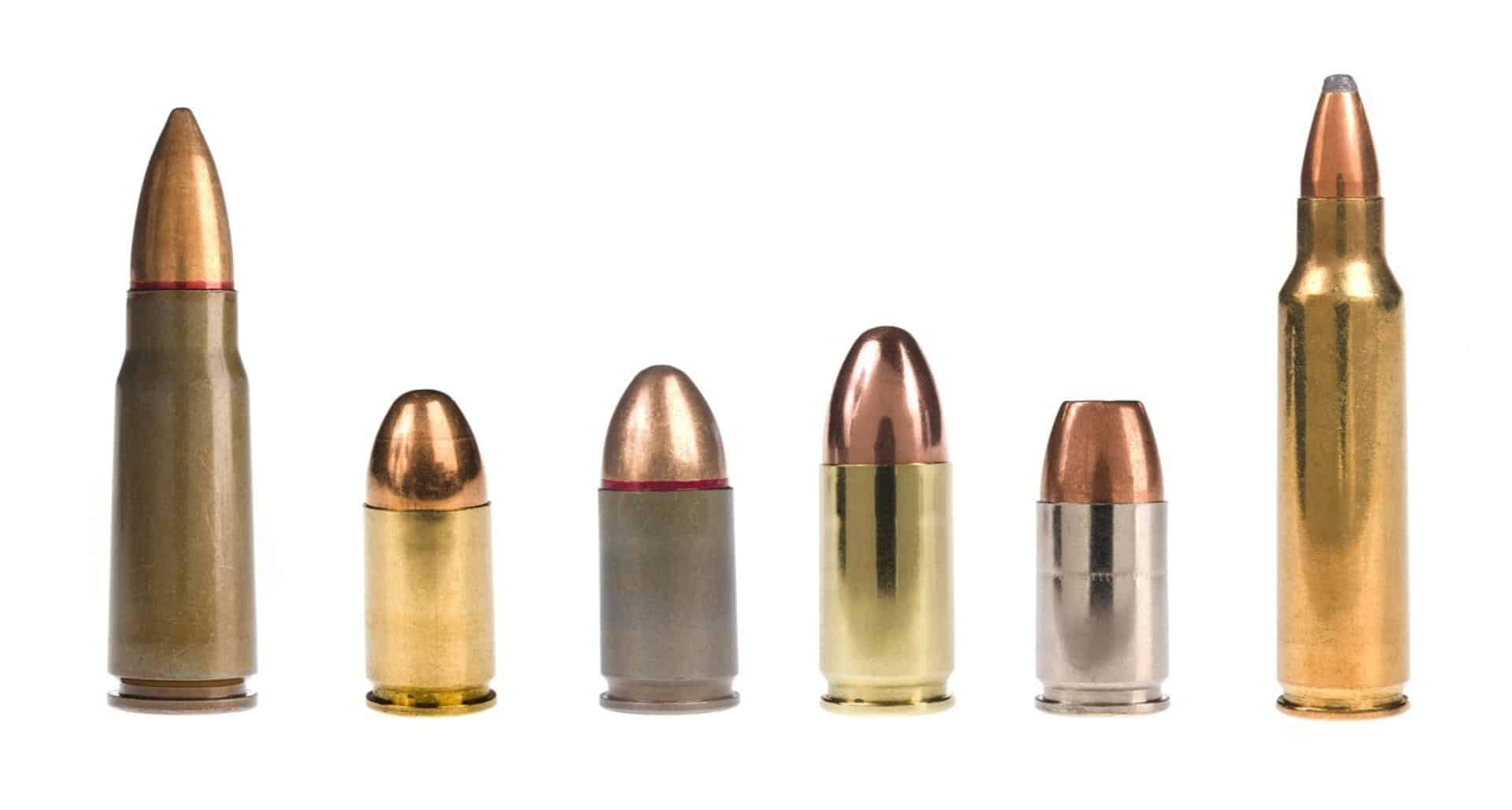
Many people ask us, “What is the best type of bullet to buy?” Understandably, it gets confusing, especially if you’re new to guns and shooting. There are so many different types of bullets available, and since some are not always legal to own, it is important to understand the different types of bullets available. Below is a partial list of popular bullet types and a little bit about what each bullet type does, its uses, and the guns it matches.
If you are considering different bullets for your guns, shooting, or competing, consider the ultimate goals you have for needing a gun. Those goals will help point you in the right direction for choosing the best bullet for your situation.
1. Plated Bullets
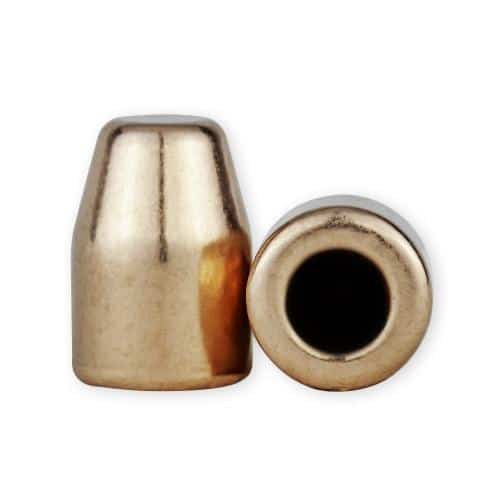
Plated bullets are a great middle ground between lead and jacketed bullets. While they can’t reach the same high velocity of a full metal jacket bullet (FMJ), plated bullets are cheaper than FMJs and cleaner than lead bullets.
These bullets work well for target practice and are ideal for indoor ranges. They offer an affordable option for shooters without sacrificing too much performance. Just be sure to avoid over-crimping, as this can cause separation of the plating. Plated bullets are a great choice for those who want clean, effective shooting with minimal mess.
2. Full Metal Jacket Bullets
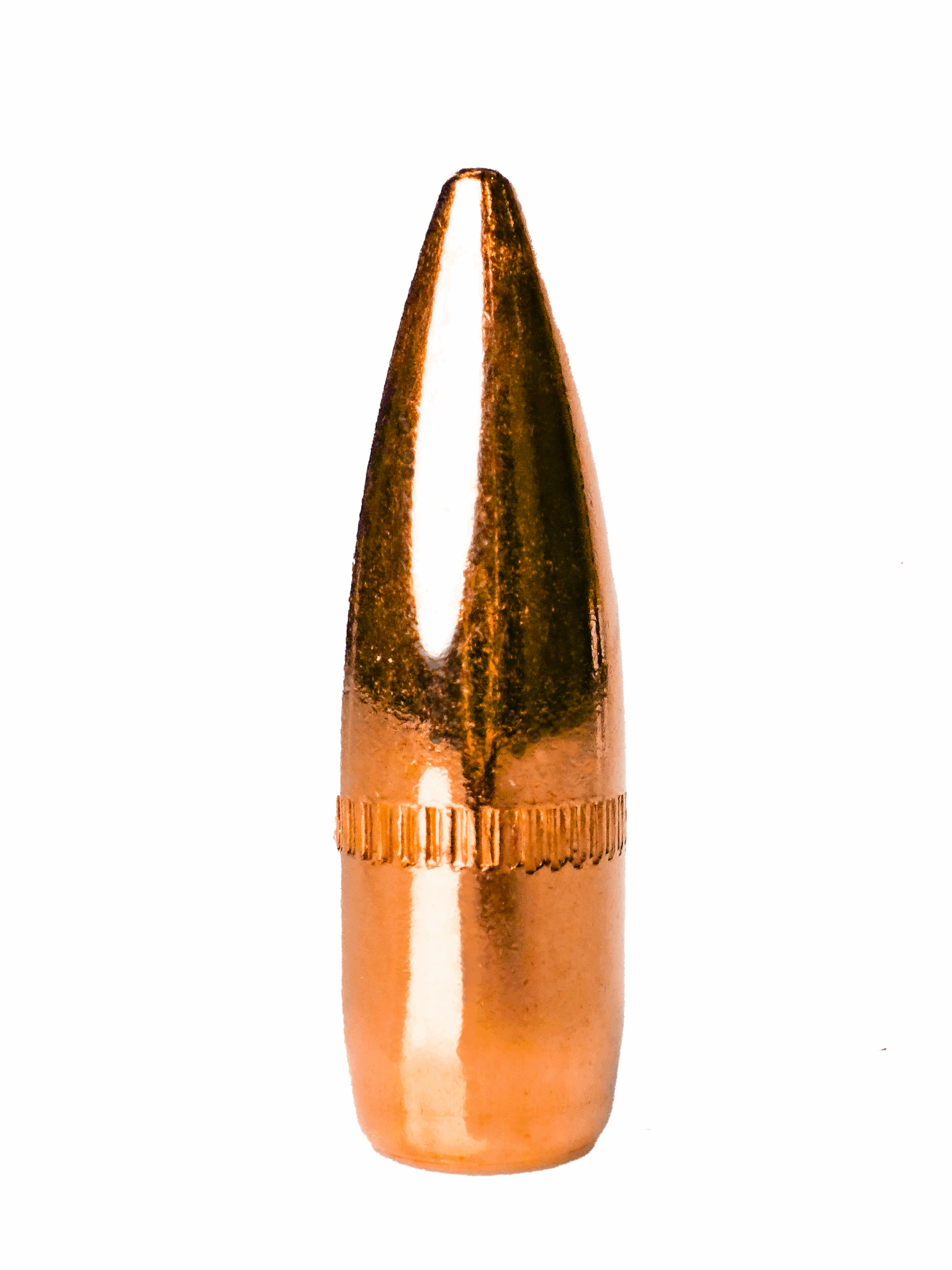
Full metal jacket bullets (FMJ bullets) consist of a hard outer shell and a soft metal inner core. These bullets are ideal when you need to maximize damage and accuracy. Originally, FMJ bullets were created as military slugs, designed for optimal penetration and effectiveness.
You’ll see these bullets most often at ranges because they are cost-effective for target practice. The copper jacket around the bullet protects the lead core from melting too quickly, which improves its muzzle velocity and trajectory, making it ideal for training purposes. FMJ bullets are available for both handguns and rifles, offering versatility and performance at a lower cost.
3. Lead Bullets
Lead bullets are available for most shooting applications. However, there are state bans on using lead bullets for hunting due to their toxic nature. Lead bullets are commonly used for target practice and offer a budget-friendly option for shooters.
They are typically less expensive than copper-jacketed bullets, giving you more rounds for your money. If you’re practicing on a budget, lead core bullets might be a great choice for you. However, always check local regulations to ensure they are allowed in your area.
4. Round Nose Bullets
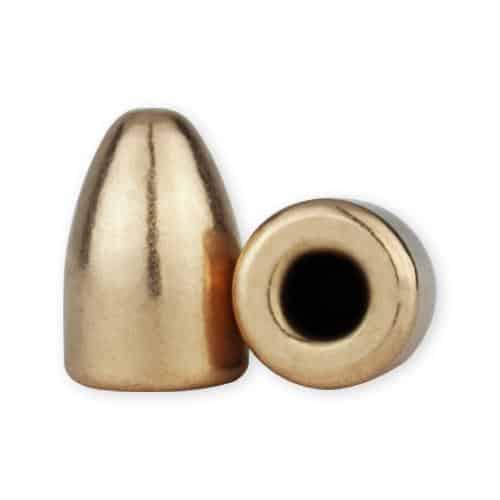
A round nose bullet has a tip that is half the diameter of the bullet. The tip is rounded, not hollow, which differs from hollow point bullets that have a concave tip. Round nose bullets offer more penetration than flat nose bullets, making them ideal for self-defense or pest control.
These bullets are a good middle-ground option for shooters. They are commonly used for target practice, but they can also be effective in hunting small game or as a self-defense option. The bullet type provides deeper penetration, which is especially useful for stopping threats in close-quarter situations.
5. Hollow-Point Bullets
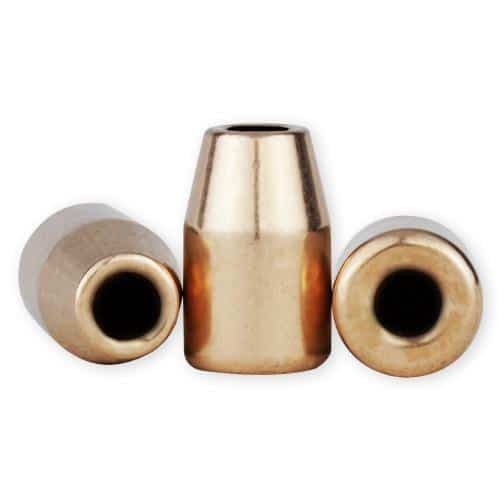
Hollow-point bullets are widely used when controlled damage and penetration are key. The design of the hollow point bullet allows it to expand upon impact, causing more damage to the intended target. This makes them ideal for self-defense and tactical situations where stopping power is crucial.
Hollow-point bullets are commonly used by law enforcement because of their ability to minimize over-penetration and reduce the risk of collateral damage. They are also highly accurate, making them suitable for target practice in some cases. These bullets are primarily used in handguns, as rifles typically fire at a higher velocity, making hollow points less effective.
6. Boat Tail Bullets
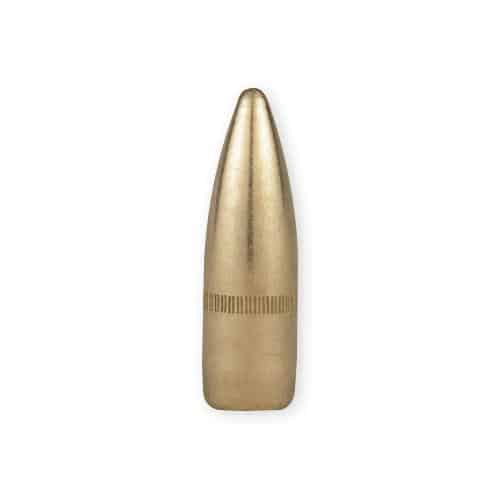
FMJ Boat Tail bullets are designed for precision shooting. The tapered tip increases the bullet’s stability and extends its range. The aerodynamic design reduces drag, keeping the bullet on target for longer distances. Boat tail bullets are ideal for rifle bullets, especially in sniping, long-distance shooting, or competitive target practice.
These bullets are perfect for those who need consistent accuracy over long ranges. Whether you’re using a ballistic tip or solid copper bullet, boat tail bullets are made for optimal performance.
7. Rifle Bullets
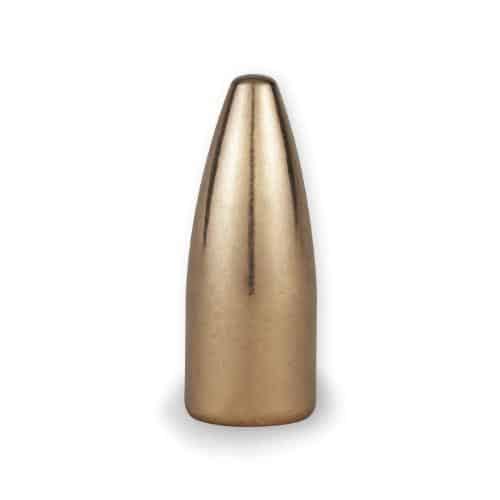
Rifle bullets are longer than handgun bullets and have more powder, allowing them to travel at greater velocity. These bullets come in various formats, including semi-jacketed, FMJ, jacketed hollow points, and solid copper designs. They are designed for both hunting and target practice, especially for long-range shooting.
Popular rifle bullets include soft point bullets, ideal for hunting larger game like deer or elk. Rifle bullets also come in specialized formats, such as armor-piercing bullets for tactical and military uses.
8. Armor-Piercing Bullets
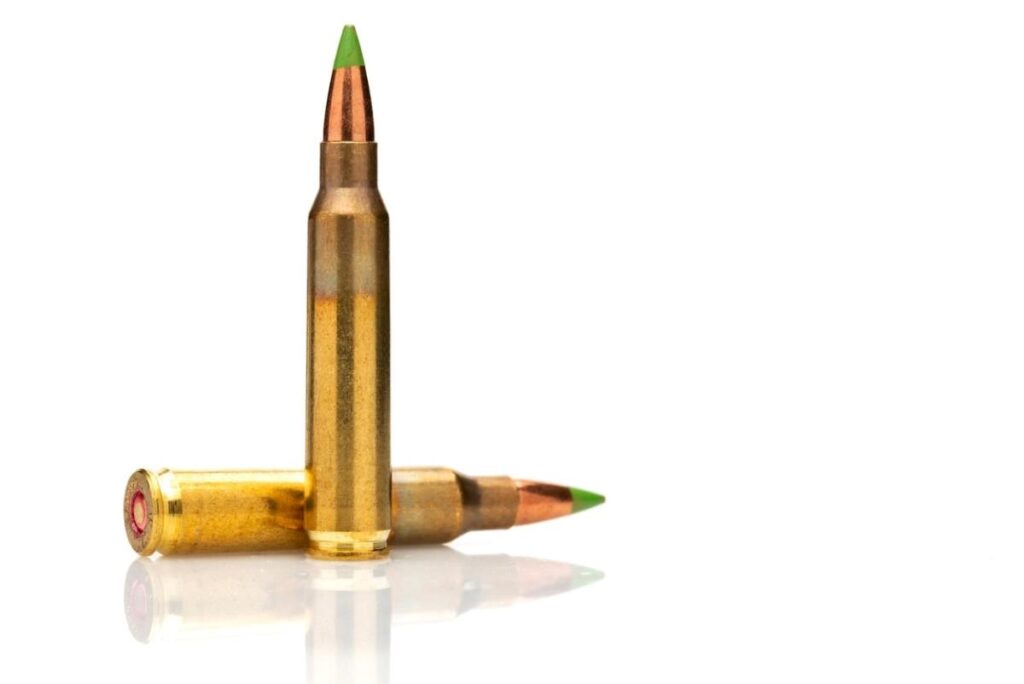
As the name suggests, armor-piercing bullets are designed to penetrate ballistic armor and shields, which would stop typical bullets. These piercing bullets are available for both handguns and rifles but are not legal in all states.
Armor-piercing bullets are often used in law enforcement or military applications, where high velocity and penetration are crucial. Always check local laws and regulations before purchasing these bullets to ensure compliance.
9. Soft Point Bullets
Soft point bullets are commonly used for hunting big game like deer, moose, or elk. These bullets are designed to expand upon impact, delivering more damage to the target. Soft point bullets are also used in self-defense, although many shooters prefer hollow point bullets for their controlled expansion.
Available for both handguns and rifles, soft point bullets are versatile and provide reliable performance in a variety of applications.
10. Hunting Bullets
“Hunting bullets” is a broad category that includes various types of ammunition designed for different intended targets. These bullets are typically designed to minimize meat damage while delivering enough force to bring down large game. Different bullet types are better suited to specific hunting goals, such as solid copper bullets for accuracy or soft point bullets for controlled expansion.
11. Heavy Bullets
Heavy bullets are slower than lighter rounds and are used for big game hunting, especially at close range. They provide deeper penetration due to their mass, making them ideal for situations where you need to deliver high damage with minimal movement.
Heavy bullets are typically used for rifle bullets in larger calibers, such as .45 or larger. These bullets are designed to pierce through tough animal hides or harder metals, delivering significant damage.
12. 38 Special Ammo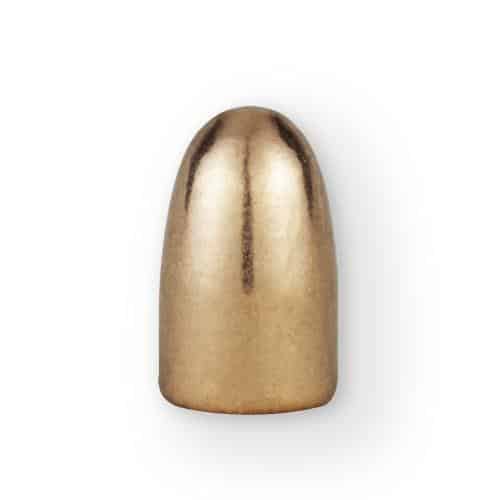
The .38 special ammo is popular for home and self-defense. It is slightly larger than the 9mm and fits into most .38 special handguns. However, the .38 S&W variety has a larger case diameter and is incompatible with standard .38 special revolvers.
The .38 special is also used in some rifle applications, making it versatile for a range of shooting activities.
13. Open Tip Bullets – Match Bullets
Open tip bullets are also known as match bullets because they are a favorite at shooting events and for target practice. They get their name due to a small indentation at the tip.
Like most ammo, they can have a range of uses. People want to use them for hunting, and they will work, but there are so many better choices. OTB is prized for competitions because they are more accurate than many other types of bullets, such as rounded-tip bullets. The small open pit at the bullet’s head expands, keeping the tip of the bullet from drooping during its trajectory. OTB bullets are one form of hollow-point bullets.
14. Law Enforcement Bullets
Law enforcement bullets are tactical ammo, often hollow point, and may include armor-piercing applications. The bullets may not necessarily be bigger or higher in grain, as both aspects of bullets mean that the gun holds fewer rounds. An example of a law enforcement bullet is a 9mm luger 135 gr – as carried by most FBI agents.
15. Close-Range Bullets
Close-range bullets are often those suitable for handguns since handguns fire at a lower velocity and do not make very good long-range weapons. Handguns are generally good in the zero to 50-yard range. Certainly, shells from handguns can travel more than 50 yards, but they tend to rapidly lose accuracy.
16. Shotgun Ammunition
Shotgun shells come in an array of sizes. They are slightly different from bullets that have a metal casing and instead have baskets that hold the shot.
Shotguns are close-range weapons and can be useful in self-defense if there is enough room to bring the gun to bear. Close quarters can make aiming the shotgun difficult. When you need to spread shot over a wide area, a shotgun does the job well. A spray of beads can cover 5+ feet in diameter.
17. Wadcutter Bullets
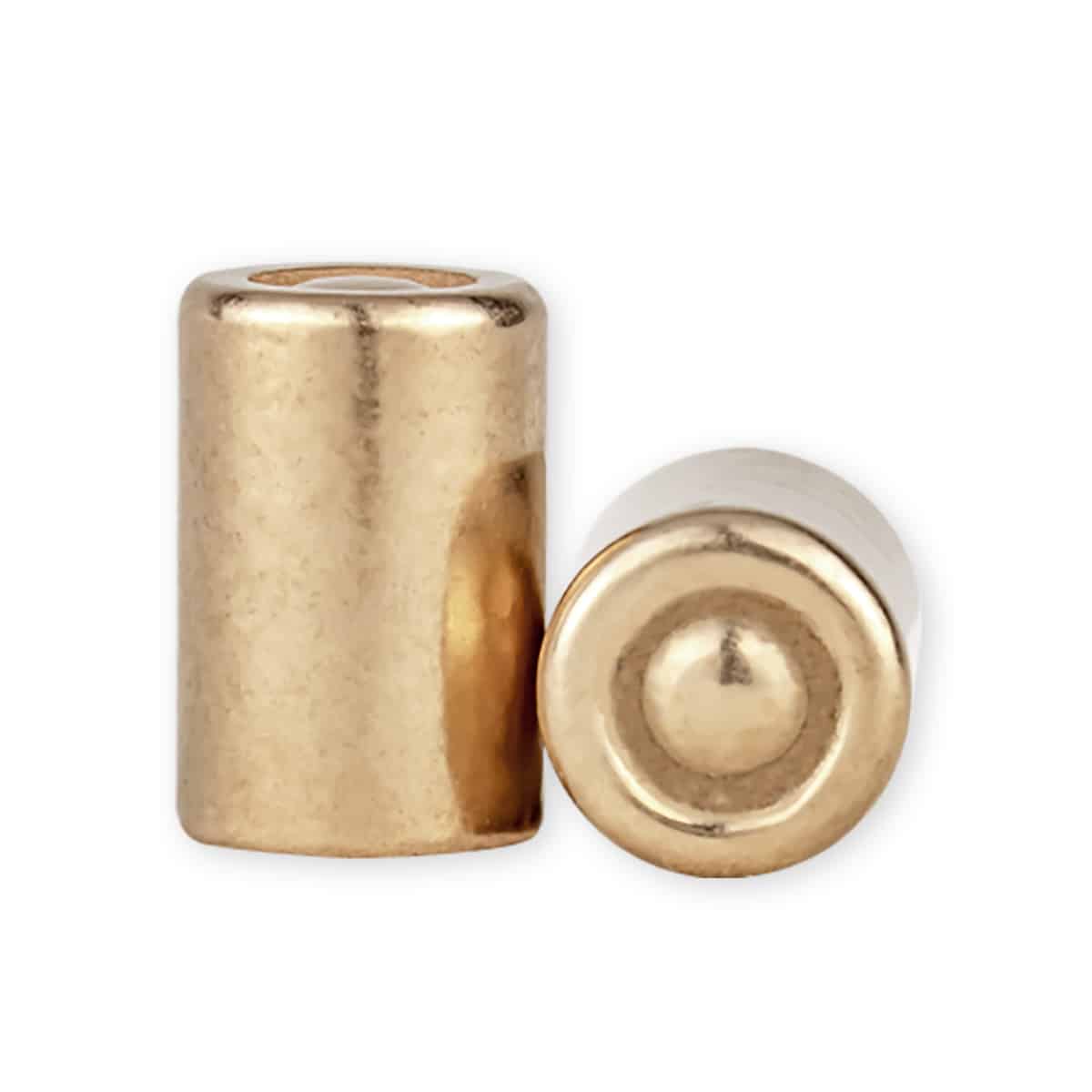
Wadcutter bullets have a flat‑fronted design that creates a clean, precise hole in targets. They are primarily used in competitive shooting because they leave easily identifiable marks on paper targets. These bullets are ideal for low‑velocity handgun ammunition, providing accuracy and consistency in target practice situations.
Why Choose Berry’s for Your Bullets
When it comes to selecting high-quality ammunition, Berry’s Bullets stands out. With a broad range of options, Berry’s delivers exceptional reliability and performance. Whether you’re aiming for the precision of boat-tail bullets or the controlled damage value of solid copper bullets, each bullet is crafted with precision for the best possible results.
Berry’s unique manufacturing process ensures durability, consistency, and affordability across all bullet styles. With bullet weight options suitable for a range of uses, including hunting, self-defense, and target shooting, Berry’s has earned the trust of shooters worldwide.
SIGN UP FOR OUR NEWSLETTER