
Your cart is currently empty!
Blog
March 13, 2026
Blog
Is Reloading Ammo Worth It? A Comprehensive Guide
March 13, 2026
Table of Contents:
- Performance and Accuracy Advantages
- Cost Savings and Financial Benefits
- Consistency, Availability, and Shelf Ammo Variability
- Equipment and Setup Requirements
- Who Benefits Most from Reloading
- Berry’s Bullets: Components and Tools to Support Reloaders
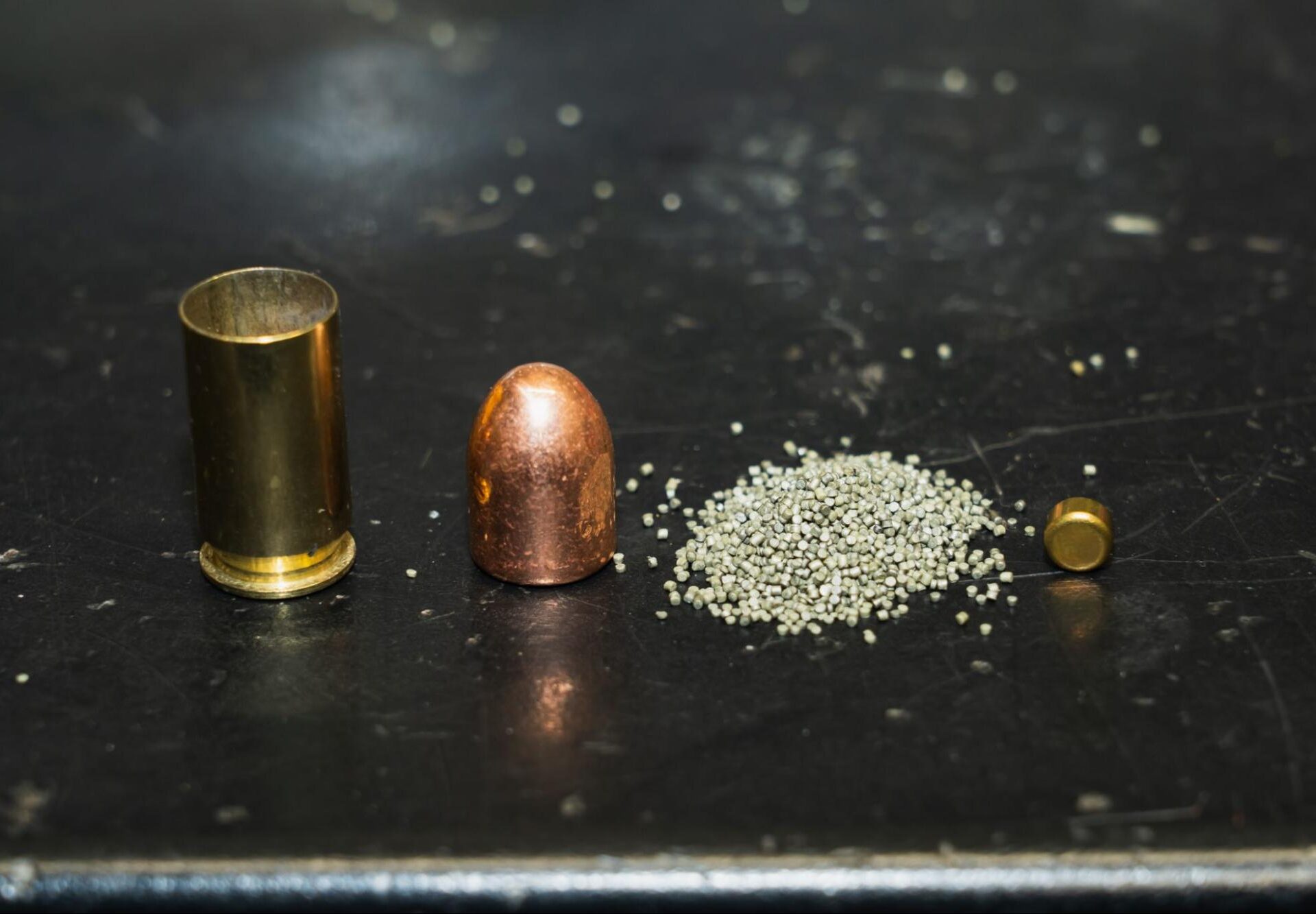
At a Glance: Reloading ammo supports better accuracy, repeatable load development, and more control over ammunition performance for dedicated shooters. By building cartridges with known components, shooters can reduce variability from shelf ammo and stay ready during an ammo shortage. Start with published data, work carefully, and track results.Reloading ammunition means assembling your own cartridges using individual components like brass cases, primer, powder, and a bullet. This process turns fired brass into usable ammo built around a specific firearm and a specific goal.
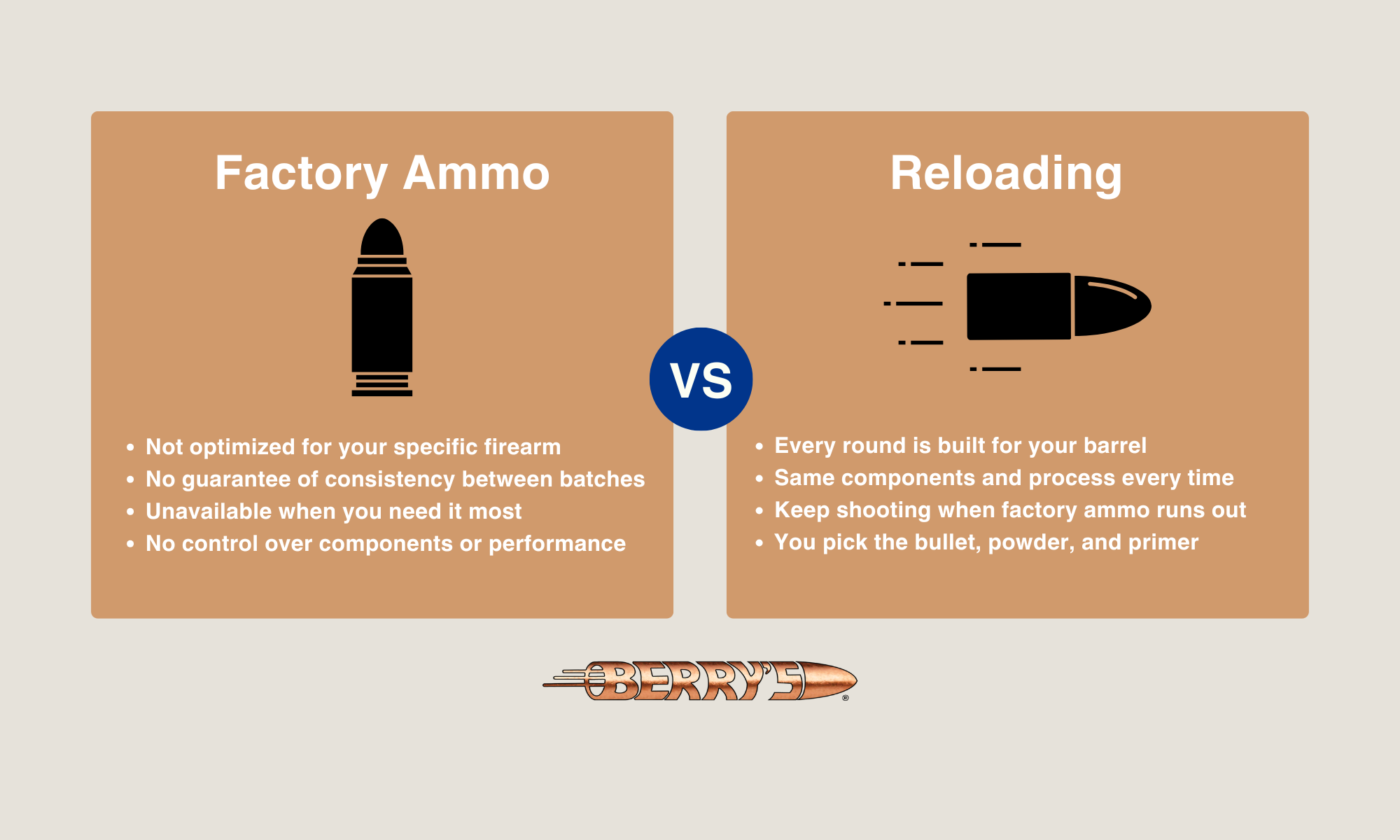
Factory ammunition is designed to function safely across a wide range of firearms. That broad compatibility is useful, but it also means a factory load is rarely tuned to one gun. Reloading gives you more control over how a round is built and how it performs.
Performance and Accuracy Advantages
Handloaded ammunition often outperforms factory ammo in a specific firearm because it can be tailored to barrel preferences. Factory ammo must function safely across thousands of firearms and chambers. That pushes manufacturers toward conservative, general-purpose specs.
Reloading ammo gives you the ability to tune a load to your firearm and your goal. That is why many competitive shooters and precision shooters handload even when factory ammunition is available.
Load development is the process that makes this possible. You test controlled changes and track results. Over time, you find a load that tightens group sizes and performs consistently.
Custom load development: Reloaders can fine-tune powder charges, bullet weights, and seating depths to match their barrel’s preferences and achieve superior accuracy compared to factory offerings.
Component selection: Choose premium bullets, powders, and primers specifically suited to your shooting application rather than accepting factory compromises designed for broad compatibility.
Consistency control: Maintain tighter tolerances on powder charges, overall cartridge length, and component quality than mass-produced factory ammunition allows.
Specialized applications: Develop loads for specific ranges, hunting conditions, or competitive requirements unavailable in factory offerings.
Better accuracy translates to improved performance whether shooting competitive matches, hunting game, or practicing marksmanship skills. The knowledge gained through load development also improves understanding of internal ballistics and helps troubleshoot accuracy issues with any gun.
Cost Savings and Financial Benefits
Cost savings are real for some shooters, but they are not automatic. The result depends on ammo prices, component prices, how much you shoot, and what you normally buy. Cheap ammo can narrow the gap. Premium factory ammunition usually widens it.
A practical cost comparison starts with what you would actually buy as factory ammo. If your baseline is match-grade factory ammo, handloading often has more upside. If your baseline is low-cost shelf ammo, savings may be smaller.
Here are the main cost drivers:
- Brass: Reusing brass cases can reduce ammo cost over time. Brass life varies by cartridges, pressure, and sizing method.
- Component prices: Powder, primer, and bullet costs change over time. Availability matters as much as price.
- Initial investment: Reloading equipment is a real upfront expense. A reloading kit or starter kit can reduce decision fatigue, but it is still an initial investment.
- Volume: The more rounds you shoot, the more chances you have to offset equipment cost.
- Baseline factory load: Replacing premium factory ammunition can lead to significant savings in some setups. Replacing cheap ammo might not.
Is it worth reloading? For many shooters, it is worth reloading when one of these is true:
- You shoot enough that cost savings accumulate over time.
- You need better accuracy than your usual factory ammo provides.
- You need a dependable supply of your own ammunition when availability swings.
- You shoot cartridges that are expensive or hard to keep in stock.
A fair takeaway is this: reloading can produce savings, but it is most compelling when paired with performance goals, not just price.
Consistency, Availability, and Shelf Ammo Variability
This benefit set comes up constantly, and it is separate from price and accuracy.
Factory ammo can vary by brand, lot, and product line. Even when the box looks the same, shelf ammo can shoot differently across production runs. Reloading ammo helps reduce that variability by keeping the load and components consistent.
This is where handloading gives you control:
- Consistency: You can reproduce the same load from round to round using the same brass, primer, powder, and bullet.
- Availability during shortages: When an ammo shortage hits, shelf ammo disappears fast. Reloaders with components can keep producing their own ammo.
- Shelf ammo variability: Factory ammunition can change without notice. Velocity and group sizes can drift between lots.
For shooters who want predictability, this is a major advantage. You are not guessing what is inside the box. You know the components, and you know the process.
<h2id=”section4″>Equipment and Setup Requirements
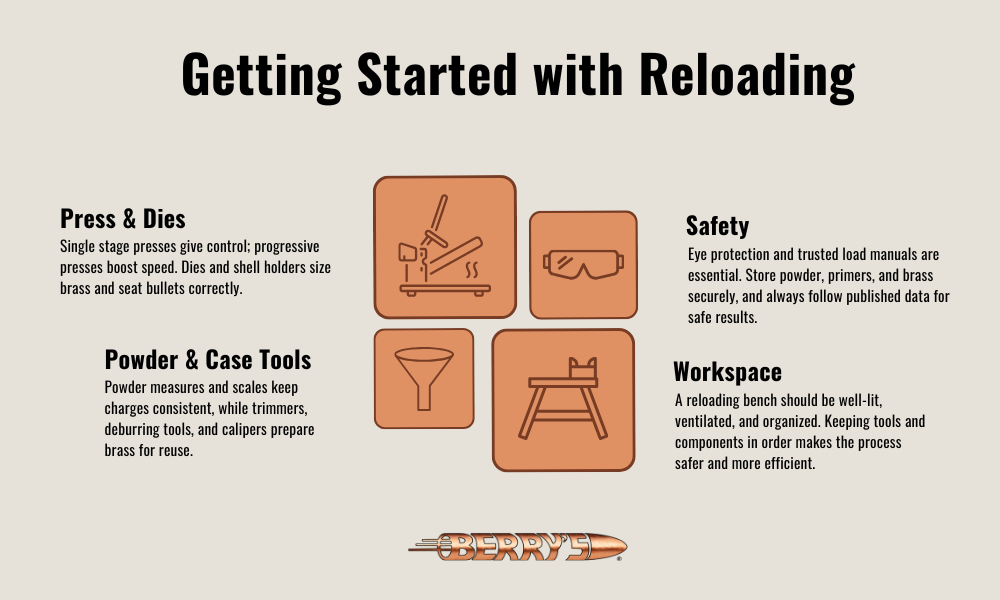
Starting reloading requires the right equipment and a safe workspace. The goal is simple. Build ammo safely and repeatably. That requires tools that measure and tools that control.
Many shooters start with a single-stage setup for focus and precision. A progressive press is common for higher volume reloading ammo, but it adds complexity. Either option can work. The best choice depends on volume, patience, and experience.
Basic Equipment List
Here is the core reloading equipment most shooters need:
- Reloading press: A single-stage reloading press is a common starting point. A progressive press can produce more output for high-volume shooters.
- Dies and shell holder: Caliber-specific dies size brass and seat a bullet. The shell holder supports the case during processing.
- Powder measure and scale: A powder measure speeds up throws. A scale verifies charge weight.
- Case prep tools: A case trimmer keeps brass within spec. Case lube helps prevent stuck cases during sizing. Calipers confirm dimensions.
- Load data: A manual provides tested data for cartridges.
- Safety basics: Eye protection, labeled powder storage, and a clean bench.
Setup and Process Control
This is where mistakes happen, so it is worth saying plainly.
Common risks include:
- Wrong powder: Mixing powder types is dangerous. Keep one powder on the bench.
- Wrong charge weight: Overcharge and undercharge are both problems.
- Double load: A double load can occur when a case is charged twice. Visual checks and an organized process reduce the risk.
Simple bench habits help:
- Keep your powder measure set for one load at a time.
- Label your components and batches.
- Inspect every case before seating bullets.
- Stop if you lose your place.
Equipment supports accuracy, but process supports safety.
Who Benefits Most from Reloading
This section should not be framed around cost recovery. The biggest winners are shooters who need reliability, repeatability, and accuracy.
Groups that benefit most:
- Competitive shooters: They need consistent results and stable group sizes across training and match days.
- Precision rifle shooters: They tune loads for a specific firearm and track accuracy improvements over time.
- Shooters affected by supply swings: Ammo shortage cycles make shelf ammo unreliable. Components can be easier to manage long-term.
- Specialty caliber shooters: Some cartridges are hard to find in factory ammunition. Reloading keeps them shooting.
- Hunters: They may want a match-grade projectile style, a specific bullet weight, or a consistent point of impact.
If your main goal is cheap ammo for casual use, reloading may not be the best fit. If your goal is reliability and better accuracy, it often is.
Berry’s Bullets: Components and Tools to Support Reloaders
Berry’s manufactures bullets and reloading accessories. We do not sell loaded ammunition or factory ammo. Our bullets are components used in rifle cartridges and other ammo when loaded by the shooter using published data.
Berry’s is known for a large catalog of superior bullets. Their process starts with a swaged lead core and uses copper plating to reach the final weight. Berry’s offers multiple weights and bullet types, including options that are commonly loaded in popular calibers.
Berry’s also carries practical reloading equipment and tools that support the process:
SIGN UP FOR OUR NEWSLETTER